a year for hope

As we went off for our night away from the kids at a nearby abbey – a personal Advent retreat we got to take together (the best Christmas present ever from my in-laws) – a friend suggested something about finding my word for the new year. There are fun word generators you can find online, that’s what she meant, but I wasn’t really planning to do that. Then, on the retreat, I flipped through the monks’ newsletter and found an article on the Year of Jubilee 2025. I hadn’t known anything about this, could not have told you that the theme for the year is hope. The monk quoted Pope Francis’s introductory words about the Jubilee, and I felt sure I had found my word without even looking for it. He spoke about Mary as the model for hope and said, “In the Blessed Virgin, we see that hope is not naive optimism but a gift of grace amid the realities of life.”

Our family is facing a year of potential transition, big time. The reality of the situation is legit cause for anxiety. There’s unknowns, there’s loss of many good things, without knowing yet if or what good will come of the changes. But for now, we are still in a period of waiting. Waiting, and hoping, that God will make clear the path forward, and that it will be a good one for our family. Hoping for His guidance and providence. I feel most hopeful, and at peace, when I remember what He has already done for us. How we moved to South Bend and then again to the DC area not knowing anyone, and almost instantly made great friends and found community and eventually great schools for our kids. So, I’m starting off this year still in a posture of waiting, but asking for the gift of that grace of hope.

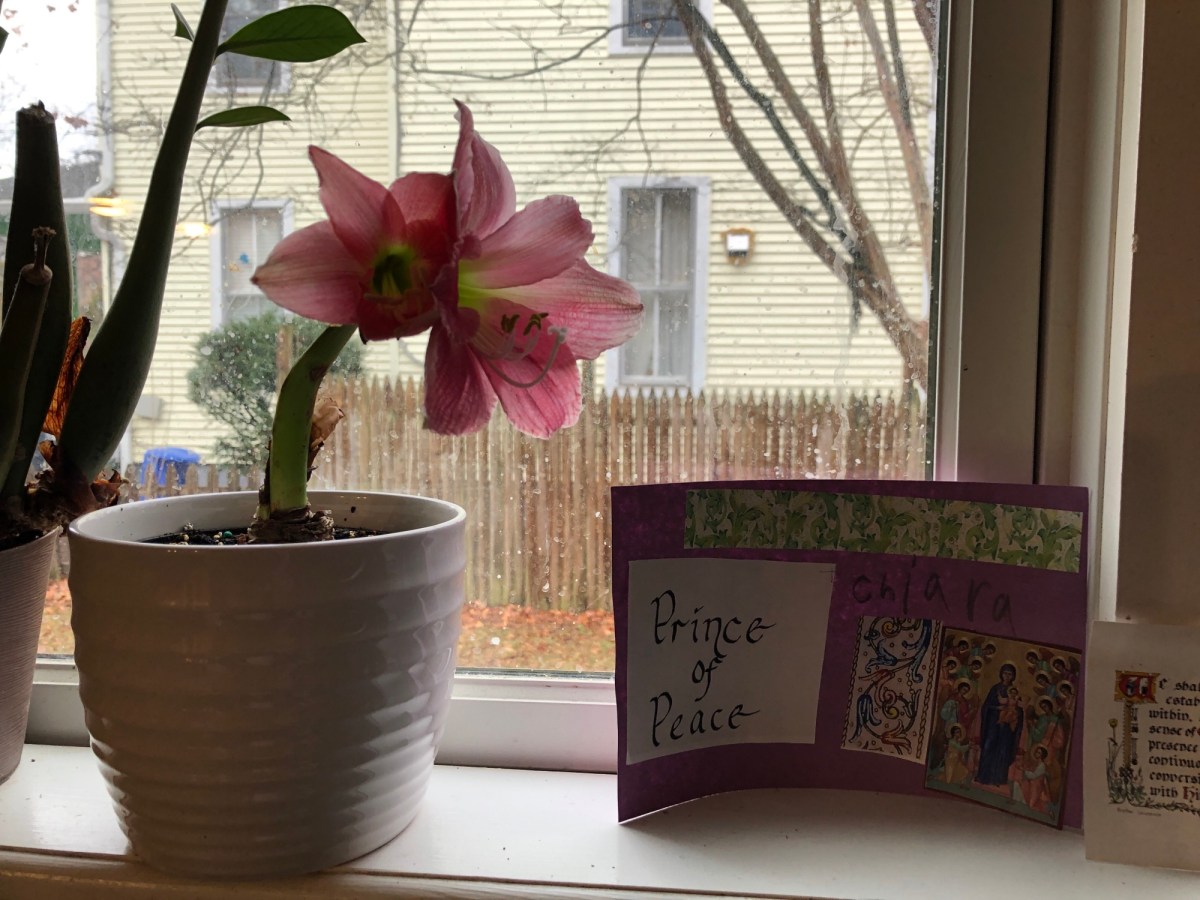
I neglected this amaryllis bulb in a plastic bag on the counter for a month but it started growing anyway, and when I finally potted it, gave us a double bloom!

A side note is that this is the first January in ten years that I haven’t had a nursing infant or been pregnant, though this long long period of waiting feels similar in some ways to the wait of a pregnancy, and the relief I will feel when the waiting is finally over will be somewhat analogous to birth. My hope is that God will be birthing something new and good in our family – something we can’t even fully conceive – and that we will be open to receiving it.

“just a mom”

“How can it be a large career to tell other people’s children about the Rule of Three, and a small career to tell one’s own children about the universe? How can it be broad to be the same thing to everyone, and narrow to be everything to someone?” – G.K. Chesterton

These are some thoughts I’ve had bouncing around for a while and an attempt to pull them together. As we’ve had our first snow storm and I’ve become obsessed with nap schedules, I’m feeling more homebody-ish. And as we’ve been more home-bound, I spend more time keeping spaces tidy for my own sanity’s sake. And laundry. Always, so much laundry. And as my days are filled with small tasks that are quickly undone, I’m finding myself, not frustrated, but grateful. (This is definitely grace, and also due to getting more sleep lately).

I think our world is in need of the small. And this G.K. Chesterton quote – not being the same thing to everyone, but everything to someone. This making of a home, these small daily tasks, this caring for children … it is hard work, definitely, but it is also good. And this is really me telling myself this, because younger, college-age Sarah living in the Bay Area, needed to hear this.

If I could say something to that Sarah, I would say, don’t make choices that are motivated by fear of what other people might think. If there’s something you want to do, even if no one else around you is interested in it, that doesn’t mean it’s not for you. In my case, it was marriage and motherhood.

But I was afraid. Afraid that I was too young, afraid to “waste my degree,” and afraid to be “just a mom.”

Just a mom. 

I think the root of that fear for me was the hiddenness, the unseen, nature of motherhood. That I would be lonely and bored if I stopped working and stayed at home with my kids. That I would no longer be making a difference in the world, having an impact. Identity, really. And community – would I have anything to talk about with my friends and family who spend most of their time in the work world, if I spent most of mine in my home with babies and toddlers?

I have found great community, now. And I don’t struggle with this anymore. I see how motherhood has peeled the onion of my selfishness and will continue forever to do so. I see how it has changed me for the better and how freaking hard it is, and how it is a path to holiness. I am not lonely and I am not bored. It could be argued that indeed, my Stanford education has been wasted because I am not earning a six-figure income, but another way to view it is from my kids’ perspective. My mom never used her BA in Anthropology from Stanford, but my sister and I benefitted immensely from the ways she was shaped by her time there. So, I am grateful to be the recipient of her “wasted degree,” at least. (I do realize that I’m speaking from a place of immense privilege – to have a BA and to not have to work to pay off tuition debt). 

I think about the good of the small and the deep. Of being everything to someone. I think about the work that can be done, the impact that can be made from the cloister of the somewhat home-bound. A friend who recently became a mother after finishing grad school told me that in this season, while she’s at home with a baby, she realized that she can be connected to the global church through prayer. I think about how St. Therese, who entered a convent at age 15 and died seven years later, is the co-patron of missions for the Church. The power of intercessory prayer.

I found this in my drafts from 2019. 5 years later, these thoughts still resonate, though I don’t feel the need to share them in a apologetic tone, and I still don’t know what this Chesterton quote is from, and maybe that’s why I never published it.  But I can see how that period of time 5 years ago was the beginning for me of experiencing motherhood as fertile ground for the contemplative life, and how this has only deepened for me since. The idea that hard physical labor and contemplative prayer go hand in hand, I am living this. The idea that in the spiritual life nothing is wasted – nothing is too small, too hidden, too unglamorous for God to use for His glory. The friend I reference who had just finished grad school and had her first child, we have both had two more babies since then, born around the same times. Our friendship is one of accompaniment in our vocations, from across the country. We have joked about being like two abbots, encouraging and praying for each other as we lead our own hidden little communities. Who knows what 5 years from now will look like, but I enjoyed finding this window into my thoughts from back then. Enough to share them now, I suppose. 

the school of love

it’s on the days when I can be on hands and knees, cleaning a bathroom, or bent over mopping a floor, and contemplate how it took almost a decade for my edges to be softened, for my selfishness to be peeled back just enough to be ready to welcome that stranger, that fifth child, who always wanted to be held, who cried so much, needed so much of me.

or how it took over two years of knowing that woman, inwardly rolling my eyes at her repeated stories, her outdated ideas, until I found myself one day asking for her advice, realizing I aspire to be like her in forty years.

it’s thinking I’ve arrived in the spiritual life because I can clean a bathroom without being consumed by rage, when it’s really just what You want for me on this particular morning. a glimpse that what You offer me is always, always better than what I grasp for myself.

a prose poem for ya, from the same monday in november when the cleaning of the house and writing poetry went hand in hand.

this Christmas tree had a lesson for me in humility as well

the trial of desire

the trial of desire

it is the squirrel above me
on the thinnest branch
it is the rainbow over
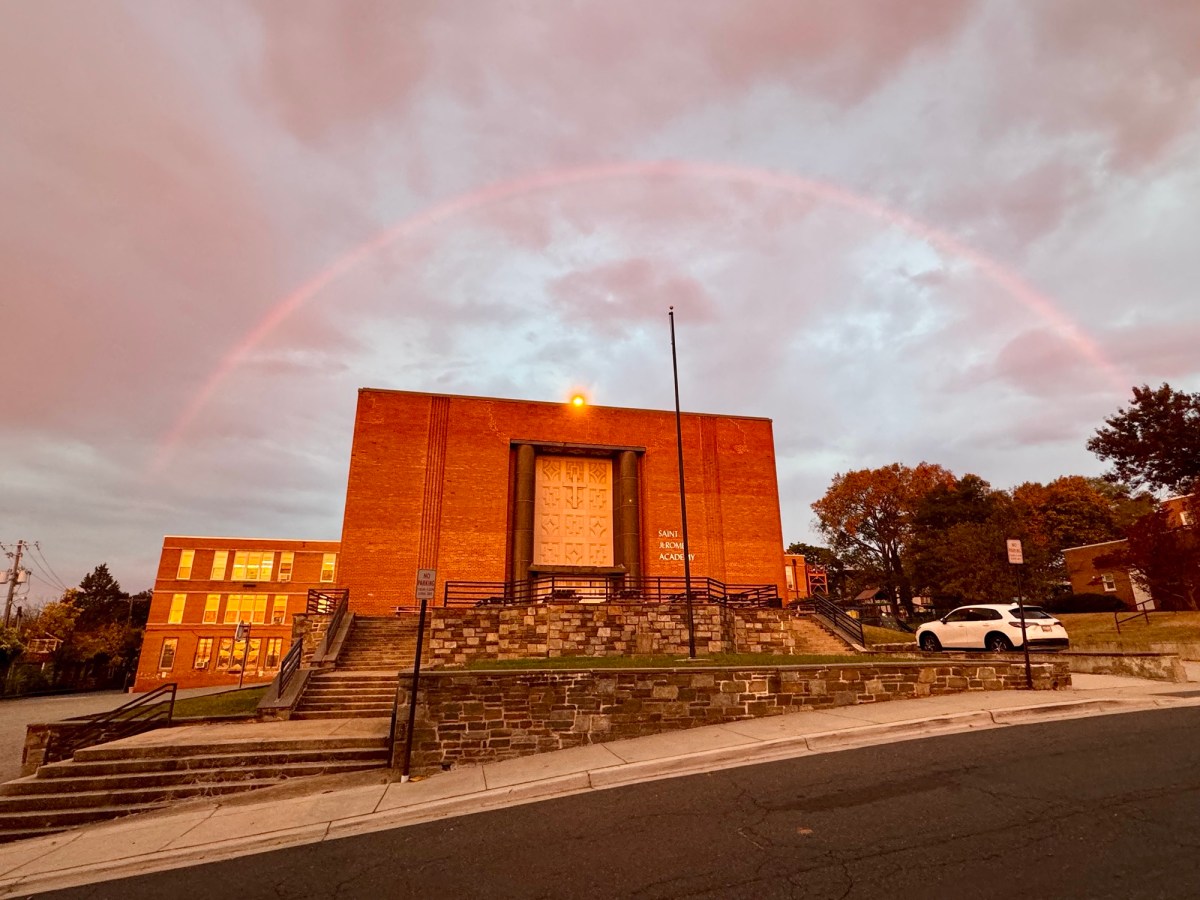
the school this rainy morning
it is the floor swept
unasked, by that child
it is you, rising in the cold
to hunt for the one beeping
smoke alarm while I
remain in the warmth

it is our tiredness softening us
so that when beauty breaks in
and moves us to tears –
we can see it is this we are
actually seeking – our
daily bread –
and why my poems all seem
to be love poems

a poem from a monday morning in november when poetry just seemed to pour out as I went about my chores. I receive it all as grace, really enjoying this slow slow process of creating and sharing poems again. photo by my neighbor Mary 🙂

Some thoughts on overdoing it, jealousy, and the grace of having things stripped away

Memory is a grace we must ask for. It is very easy to forget, especially when we are well fed (cf. Dt 6:10-12, 8:11-14) – Pope Francis (pulled from the Magnificat 3/6/24)

At the end of January and into early February, I was riding a total high of endorphins. I had worked my way slowly and carefully back into running and was finding time to get out for 3 mile runs twice a week. It felt amazing. I eased into 4 miles and still felt awesome. I was still doing a lower body strength workout one day, and would do abs after the runs, and was soaking in all the joy of feeling strong and being able to do this thing I loved after so long. Then, I got Joe sleeping through the night and after two nights of uninterrupted sleep, I was out for a run and thought, hey, I want to run a half marathon! I should mention, I had also gotten onto Strava, so I had this social media/dopamine component – when I completed a run I could post it and get “kudos” from friends and family – a feedback loop that made me want to run more and faster and longer, to achieve more goals and feel even more awesome. 

All of this had the very slight feel of being an idol in my life, but was easy to dismiss because it gave me so much joy, it was a fun flow activity, my unicorn space, that spilled over into my vocation as a mom and helped me be a more patient, loving mom. So, I thought I needed it. I deserved it! 

Fast forward to the end of Week 1 of my Half Marathon Training Plan, and I found myself hobbling to finish my 7 mile run, waddling for the rest of day, barely able to walk. The jump in mileage, frequency, and intensity from one week to the next was too much for this 7 month postpartum body to handle and I had strained my groin and adductor tendon as my pelvis had slipped out of alignment. 

I was pretty devastated. It was a crash after such a high, and until I could see a PT and figure out what was wrong, I was stuck, waiting and resting it, not really knowing what “it” was. I started hating Strava. Ugly feelings of jealousy flared up and as I was spiraling I realized how much ego had been wrapped up in this activity. It had been a source of joy, yes, but did I need it? No. 

In this time of feeling stuck and waiting, Lent started. At the 8am Ash Wednesday Mass, with Chris, Joe, and John, I suddenly realized that daily Mass was available to me in a very easy way. Without a workout plan to think about and look forward to, I found myself open to going with Chris, and even without Chris, after dropping off the girls at school. I went, and I went again, and I’ve kept going. I saw the gift God had dropped into my lap, and the grace of hungering for Him, for Him to nourish and sustain me in my disappointment. It’s a brief, sweet window of a few weeks where Joe is still fairly quiet and immobile and happy before his morning nap, and John is pretty good too. I’ve found myself soaking up gratitude for this unexpected grace, and for the words I’ve been resting in – of being His beloved. It’s a time of waiting for our family, also, and I’ve moved from restless anxiety about that, to holding an image of waiting as floating, supported by God’s love and mercy, just floating and waiting. 

I saw the physical therapist yesterday, so my pelvis is back in alignment now, for which I am very grateful. I can start doing strength exercises, stretching, and swimming again. And I’m so happy. I’ll get back to running eventually. But now that I feel well fed, in less pain, I don’t want to forget. The grace of the desert, the grace of waiting. The grace of having my ego stripped away, and feeling a new level of hunger for and dependence on God. My tendency towards comparison and jealousy, and, instead, the hundredfold that Jesus wants to provide for me. 

And a blog post came out of it! Who knew? Prompted by my friend Annie’s suggestion to write it down. ☺️

this looks so bleak now but I snapped it halfway through a run and I was loving it. There’s a Great Blue Heron in the water.

when I thought I had an anger problem and then remembered I’m an introvert

Since adding Chiara to the mix, I’ve been reading/thinking/talking about parenting more than I ever have before. It’s not her – she’s almost unicorn baby level of chill – it’s me. It’s me learning what it feels like to be stretched to my limits and operate at full capacity. And what it looks like when I snap.

Anger, friends. So much anger.

Before becoming a mom, I don’t know if I’d ever experienced anger as an emotion before. Seriously. Annoyance and irritation, sure, but … rage? Nope. I’m an Enneagram 9 and the classic problem with that type is “being out of touch with one’s anger,” and I always thought, hm, weird, that doesn’t apply to me. Hah!

A while ago, I had two separate conversations with friends in the course of a week about going to counseling for parenting issues. Specifically, dealing with anger as a parent. And it surprised me that I had never thought of this as an option before, but because it popped up twice, it seemed like something I should consider. But then, all the obstacles – cost, insurance, childcare? And I didn’t do anything.

Then, one afternoon a few days later, I had a fantastic blow up at Evangeline and finally decided – if counseling is what it takes to make this stop, I have to do it.

I ended up making an appointment at the Women’s Care Center in town because a) it’s free and b) I could bring Zelie and Chiara, and I had a conversation with a counselor. I went in expecting her to give me strategies to manage anger, but when I described that I have a 4 year old, 2.5 year old, and 5 month old, and I get angry with my 4 year old when I’m tired, she turned the conversation towards self-care.

Are you getting enough sleep? Do you have help from your husband? Do you get time to exercise, be alone?

And I thought, Wait a second. Is this really the answer?

I consider myself good at asking for help and knowing what I need. The self-care route seemed like an easy out.

Later that day, I started reading a book called Introverted Mom, and found myself laughing in relief. She laid out three truths about anger that RESONATED.

  1. Anger is the natural response to the hard parts of motherhood, especially as an introvert.
  2.  Anger is an indicator to pause or change something (a bodily cue, similar to hunger).
  3. Quiet is a must for an introverted mom.

Oh yeah!! I’m an introvert! Everything made sense again. (I don’t know if I fully recommend this whole book, but it was worth it even just for this beginning part).

I don’t have an underlying anger issue. The self-care stuff isn’t secondary. I need to recharge to be a sane person good mom and partner to Chris.

The book gave me some reminders of ways to recharge and I thought of things I already naturally do, but now I recognize them as necessary.

Here’s what’s working right now:

  • Lighting a candle in the morning darkness
  • Morning Prayer from Magnificat while I nurse (even v interrupted)
  • Playing music
  • Getting out for a run about 2x/week
  • Reading novels while nursing
  • Stepping outside to just breathe
  • Soaking up the colors of the fall leaves
  • 20 min power naps
  • Going to bed as early as I can
  • Conversations with good friends (over Marco Polo if not in person)
  • Giving Evangeline a 20 min show after her quiet time (to bribe her to stay in her room for her quiet time and give myself a little more time)
  • Historical British dramas (Downton Abbey)


I’m learning to recognize what my “buttons” are, and to step away when I need to. And to note, without judgement, when I am particularly tired or overstimulated … before I lose it. I’m working on making time during the week and a regular time each weekend for me to do something restorative (Chris is a big part of this).

Because then I set myself up to enjoy time with these cuties and they get a happier mama. Win win.


I love you so much I could eat you up: what I’m learning from thirteenth century nuns

new-camaldoli-hermitage-monestary-1248x702
Overlook at New Camaldoli Hermitage in Big Sur, CA. Photo by The Manual.

Jesus knows how bodies work

Your hunger for truth, beauty, and goodness is real. Really take, really eat, really be fed. It is here for you. I am here for you. I had been going to mass for months and the real presence was my last obstacle. At a New Camaldoli Hermitage in Big Sur, CA, we gathered around the altar with a few other people at a daily mass, and as the priest spoke the words, “Take this, all of you, and eat of it, for this is my body, which will be given up for you,” he held up the bread that the monks made there, and I felt in my body that this was Jesus, that he was speaking to me. It was less a command and more permission granted, affirmation given. You are hungry, and I am here to feed you. I was overwhelmed to be seen and known in this way, and I sobbed through the rest of this very intimate mass.  

That kind of mystical experience of the eucharist has only happened that one time for me. I became Catholic shortly after becoming a mother, and my typical experience of receiving the eucharist is much more mundane. I’m usually herding a preschooler in front of me or holding a squirmy toddler. I don’t often feel that I have much of a devotion at all to Jesus in the eucharist. And yet, the grace is still there. He still feeds me. And he feeds the baby inside me, which is growing without conscious thought or effort on my part. Jesus knows how bodies work.

Processed with VSCO with a6 preset

“If I had you, I would eat you up, I love you so much!”

In Caroline Walker Bynum’s essay, “Women Mystics and Eucharistic Devotion in the Thirteenth Century,” she explores how, for many women in this time, “The eucharist was … a moment of encounter with that humanitas Christi … For thirteenth-century women this humanity was, above all, Christ’s physicality, his corporality, his being-in-the-body-ness; Christ’s humanity was Christ’s body and blood” (p.129). These women had a profound understanding of Jesus’s experience of living in a body that impacted everything about how they understood him and their own bodies. “The humanity of Christ with which women joined in the eucharist was the physical Jesus of the manger and of Calvary. Women from all walks of life saw in the host and the chalice Christ the baby, Christ the bridegroom, Christ the tortured body on the cross” (p.130). And, in a way that seems crazy to us now, these women knew that that they could unite with Christ’s sufferings in their bodies and express their love for him in a physical way.

It is this “being-in-the-body-ness” that I experience when I am tired and distracted at mass. It is not removed from Jesus’s experience. He knows what it is like to be in a tired, distracted body. It is this “being-in-the-body-ness” I live when I look at my baby and am overwhelmed with love for this truly good, undeserved gift. In and through the body, this mystery of new life came to me. When I smother my baby in kisses and nibble at her chubby cheeks, that feeling of I love you so much, I can’t get enough of you, I just want to eat you, is not removed from Jesus’s experience either. God created us, in our bodies, with an appetite for what is truly good. Bynum writes, “Both in a eucharistic context and outside it, the humanity of Christ was often described as ‘being eaten’ … Anna Vorchtlin of Engelthal exclaimed, upon receiving a vision of the baby Jesus: ‘If I had you, I would eat you up, I love you so much!’” (p. 129-130) These thirteenth-century women knew, in a way I am just beginning to discover, that this appetite is real. We live in bodies that literally hunger for the good and beautiful, and it is Jesus we desire. This is my body, take and eat. He is here, to feed us.

New Camaldoli Hermitage
Visitors join the monks around the altar at mass. Photo by New Camaldoli Hermitage

using my gifts

In the first trimester of this pregnancy, when I was feeling super tired and introverted, I found myself using the pregnancy as an excuse to get out of social commitments. I know we planned to hang out tonight, but actually, I’m pregnant and I just want to go to bed at 8pm (real text by moi). Right after that, I was invited to give a talk to some undergrad women for an Advent day of reflection. And I jumped at the chance – it did not even cross my mind to say no.

Before I left my work with campus ministry in California, one of my colleagues, Wes, spoke a word of encouragement that I’ve been thinking about lately. He said something like, I hope this next season of life would give you the chance to use gifts that you haven’t been able to in your work now. I was about to have two babies under two and move to a new state. I remember thinking, Interesting… I have no idea what that would look like. 

Almost two years later, I’m seeing that this stay-at-home mom, Notre Dame grad-wife life has given me the chance to flex old muscles. Two months after we arrived, I started campaigning with brand-new friends and neighbors for family student housing to continue after the demolition of University Village – that was a wild ride that I got surprisingly fired up over (hello, eight wing of this enneagram nine). And little opportunities have popped up since then, that have tapped into my love for writing and public speaking, and have been doable with young kids and have just felt right. 

Along the way, I’ve been learning more about myself. About what gives me energy and life, and finding the courage to say yes to those things. In the fall, I got connected with a very flexible, part-time editing job, helping students with undergrad and grad school application essays. I started this, my own lil blog, and have really enjoyed having a space to share some of my thoughts and reflections (with my ten followers, lol). And most recently, I wrote a post for the McGrath Institute’s new blog about interruptions. 

There have been other opportunities that I’ve gotten really excited about, but the timing just hasn’t been right (like this new Catholic literary journal I found on Instagram that was accepting fiction and poetry submissions that week). I’m learning to be patient and trust God’s timing with this stuff more, rather than try to force things to happen, or be all angsty about it. And mostly it’s just been a cool journey of becoming more confident that yes, I do have gifts and strengths, and yes, there will be opportunities to use them, even in this season.


january thoughts on art and motherhood

A new mom friend from Evangeline’s preschool shared this essay with me (thanks, Rose!) and I loved this part especially.

“But at my most hopeful I think that writing and art are essential to motherhood and vice versa. Each accesses the most ancient, the most universal, the most complex emotions. Each requires the nurturing of a new consciousness, a new being, a new way of seeing. Each is endlessly different and endlessly dull, endlessly challenging and spiked with constant disappointment and beauty.” 

I need this reminder in the monotony of winter. As the newness of the new year lessens and January presses on with long dark mornings and gray skies. Each day is spiked with beauty, and each moment with my girls is endlessly different and endlessly dull. I marvel over the little sentences Zelie is putting together and how she plays independently with her toys when Evangeline is at school. I find myself surprised at the pictures Evangeline is drawing these days, the shapes she now makes, the colors she puts together. And I die with frustration when Zelie wakes up in the middle of the night and then naps through the morning spin class I have come to count on with near-obsession. Or when Evangeline needs to be dragged to the potty before she pees her pants. And something about the gray and the cold makes it harder for me to recover from these attacks of extreme grumpiness.

56918188956__79993b7e-5c0e-4f69-8960-3bddbea8412b
creativity, but not where I  appreciate it.

All the while, I am looking for ways to create. To write, to share my thoughts. To add beauty to our home. To try a new craft or baking project. Winter lends itself to this, with all the time spent inside and inside my own head. And most of the time I’m not even thinking about my biggest winter project, which is constantly growing, without any conscious effort on my part. Week after week I am surprised to see how big she is and how my belly is growing. It’s just happening. Ordinary, ancient, and amazing.

that time I ugly cried at a poetry open mic

I recently had an experience that I think could be described as mystical, in that it felt like a sudden and unexpected outpouring of grace. I’ve been trying to process what happened and why it happened ever since, because although I am very grateful, it was also extremely embarrassing.

On Wednesday night last month, Chris told me that the after-party for the Thursday night prayer service led by the seminarians would be a poetry open mic, and asked if I would want to read one of my poems. I immediately said no. But then, the next day when his classmate texted me asking if I would read a poem if she did, I reconsidered. Two invitations? I decided I would read my villanelle, but I would also read a very good villanelle.

This prayer service is held in the chapel of the seminary on campus, which has the acoustics of a huge bathroom. The seminarian leading the singing doesn’t need a microphone, his voice carries easily. And the response from the pews is thunderous. It is a beautiful time of candle-lit prayer, most of it sung, with a couple short readings and a homily. The last line that closes the evening is the seminarian singing, Let grace come and this world pass away. And the response is, Amen. Come, Lord Jesus. 

This last line, the chorus of voices echoing around me, got me. I had this sudden, deep longing for everything to be made right, a strong desire for Jesus. And the way I experience this kind of longing is through crying. (I’ve mentioned I refer to it somewhat jokingly as having the gift of tears, which is a thing, I just don’t know if I really have it). I teared up but quickly pulled it together because everyone was starting to leave and head downstairs for the open mic part of the evening.

After grabbing tea and scones, Chris and I found seats right in front and sat chatting with his classmates, waiting for the poetry part to begin. I was nervous because as it started, it seemed most people were reciting poems they had memorized, or doing original spoken word poems. I firmly planned to just read the two poems I had brought. Some were funny, some were funny and high energy, and mine were neither. But when it was my turn, I stood up, put on the designated “poetry scarf,” and began.

The first poem went fine. I did a little introduction about villanelles, said I’d be reading a really good one for them first, and read it. Then I turned to mine and felt it deserved a little introduction, too. I think I made the mistake of being rather vulnerable. I shared that this poem was about the Visitation, and that as I was a fairly new convert to Catholicism, I was still getting to know Mary. I like this part of scripture because it shows us Mary from Elizabeth’s perspective, and gives us another glimpse into her life. By this time, my voice had started shaking. I realized that I had just opened up a lot of myself in front of about forty people, most of whom I didn’t know. But I took a deep breath and started reading my poem.

As I was reading, it was the strangest thing, it was like I was surprised by the poem. It’s about two women, two mothers with babies in their wombs, and I suddenly thought, I’m probably the only mother in this room. I read, “Already she faced her share of the sword,” and thought, who am I to be writing this about this woman? By the time I got to the line, “Blessed one! With your yes you moved us toward/the home we long for, and all things made right,” I had totally lost it. I was full on ugly crying in the middle of my own poem.

I garbled out the last two lines, muttered, “Sorry,” and tried to sink as quickly back into my seat as I could. I could not stop crying.

I was so embarrassed and I had no way to explain to all these strangers why I was crying. I wasn’t really sure why either. I tried to dismiss it – it’s just because I’m really tired. But as I tried to block out everyone around me and how ridiculous the situation was, I remembered that God usually does speak to me in deep ways through tears. And this had felt like grace – just much more publicly humiliating and therefore bewildering than I would have chosen.

Two days later I went to a lecture on campus about Chiara Lubich, who founded the lay movement, Focolare. I had no idea who she was but for whatever reason I wanted to go hear this talk. The professor spoke about Chiara’s focus on Maria Desolata  – Mary desolate.
275px-Michelangelo's_Pieta_5450_cropncleaned_edit

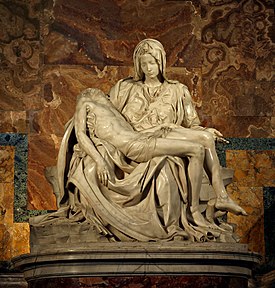
He said that Mary, at the foot of the cross, sees all of the misery and suffering of the world, and holds it all. That Maria Desolata was an icon for Chiara for looking unflinchingly and lovingly at a world in pain. Chiara wrote, “If Jesus forsaken seemed to us to be the pupil of God’s eye open onto the world, we can say that Mary desolate seems to us a kind of camera obscura taking in all that is negative in the world (Essential Writings: Spirituality, Dialogue, Culture, p. 299). And the professor commented, “The Mary who holds the disfigured Christ is also the one who can gaze objectively at the world in all of its disfigurement. Just as a photographic image is developed from a negative, Mary can hope for redemption of a fallen world in the midst of her and the world’s most complete agony (“Chiara Lubich: A Saint for a New Global Unity,” Casarella).” 

And I started to cry again. Was that what I had experienced, a tiny glimpse of this? Was that the grace?

Professor Casarella went on to say that Mary desolate also offers “an icon of knowing how to lose.” He summarized Chiara’s thoughts on this, saying, “Apart from her Son, Mary had very little. When she lost him in his Passion, the loss was total and decisive. But she saw this loss for what it really was. The one who prepared all her life to be alone, became Mother to each of us, to the whole of the world (Essential Writings p.302)… Her love, her capacity for giving is human, real, and maternal. It consists of a unique capacity to bear the sorrow of the world in one’s heart. According to Chiara, when a mother hopes all things for her child and puts up with all the troubles involved, she sees further than others. (“Chiara Lubich: A Saint for a New Global Unity,” Casarella). 

I was sitting next to one of Chris’s classmates and when she turned to me at this point to whisper something, she saw that I was crying. She looked concerned and asked,”Are you okay?” I nodded and whispered, “Yeah, I’m fine, I just had this mystical experience the other night and I think it’s making more sense to me right now.” She accepted this as a reasonable explanation (you’re the best, Jackie).

I’m still reflecting on all this and will be for a long time. But in the meantime, St. Therese of Lisieux said, “Everything is grace.” It took ugly crying in front of strangers but now I think I have some idea of what she meant.